Showing posts with label 2 Nephi 8. Show all posts

Monday, November 29, 2021

Endowment Narratives in the Book of Mormon, Part 3a -- Finding Meaning in the Symbols

The more I study the scriptures and ponder their meaning, the more I realize how much we underappreciate the significance of the archetypal story of Adam and Eve as presented in the books of Genesis, Moses, and Abraham. I believe the ancient prophets saw themselves as Adam and created intentional parallels in their accounts.

As we continue this series on "endowment patterns" in the Book of Mormon, I hope I'll be able to draw out meaning from our list of twelve recurring details that connect back to Adam and Eve.

For reference, here is the list of details:


  1. Commanded/warned (often in a dream or vision) to depart
  2. The group they leave are involved in secret combinations or intend to kill them.
  3. They seek to bring all who will hearken/listen
  4. The new covenant people passes through a wilderness on their journey
  5. "Many days"
  6. Tents (a symbol of the presence of the Lord)
  7. A list of animals (sometimes "of every kind")
  8. They inherit a land
  9. New names are given (see Genesis 2:20)
  10. They obey the commandments of the Lord
  11. Abundance/Prosper
  12. They are usually led by a righteous patriarch/king/royal family member

I'm planning to take my time going through each of these symbols, so this part will be broken up into multiple sections.

Commanded/warned (often in a dream or vision) to depart


We read about a "deep sleep" that God caused to come upon Adam (see Moses 3:21 and Abraham 5:15). Waking up from that deep sleep is a powerful covenant symbol. Read the following verses from the Book of Mormon with this context in mind (for the sake of not making this post too long, I am only including the key phrases from these passages, but I encourage you to read the full context of each of the following passages to really get the message). I've highlighted references to "awake" in yellow, descriptions of what we are to awake from in aqua, and I've put in bold italics other key terms and phrases.


13 O that ye would awake; awake from a deep sleep, yea, even from the sleep of hell, and shake off the awful chains by which ye are bound, which are the chains which bind the children of men, that they are carried away captive down to the eternal gulf of misery and woe.

14 Awake! and arise from the dust, and hear the words of a trembling parent... (2 Nephi 1)


28 Awake, my soul! No longer droop in sin. (2 Nephi 4)


9 Awake, awake! Put on strength, O arm of the Lord; awake as in the ancient days. (2 Nephi 8 quoting Isaiah 51; see also verses 17 & 24, 3 Nephi 20:36, and Moroni 10:31)


11 O my brethren, hearken unto my words; arouse the faculties of your souls; shake yourselves that ye may awake from the slumber of death; and loose yourselves from the pains of hell that ye may not become angels to the devil, to be cast into that lake of fire and brimstone which is the second death. (Jacob 3)


40 ... I pray that ye should awake to a remembrance of the awful situation of those that have fallen into transgression. (Mosiah 2)


2 And the things which I shall tell you are made known unto me by an angel from God. And he said unto me: Awake; and I awoke, and behold he stood before me.

3 And he said unto me: Awake, and hear the words which I shall tell thee; for behold, I am come to declare unto you the glad tidings of great joy. (Mosiah 3)


7 Behold, he changed their hearts; yea, he awakened them out of a deep sleep, and they awoke unto God. Behold, they were in the midst of darkness; nevertheless, their souls were illuminated by the light of the everlasting word; yea, they were encircled about by the bands of death, and the chains of hell, and an everlasting destruction did await them. (Alma 5)


27 But behold, if ye will awake and arouse your faculties, even to an experiment upon my words ... (Alma 32)


I love this "awake from a deep sleep" symbolism. Jeff Lindsay has explored the connection between dust and chains in a series of Interpreter articles which center on the hypothesis that the Book of Moses contains source text known to authors of the Book of Mormon (part 1 here). If this topic interests you, I encourage you to read more about it. It isn't hard to find this same symbolism in our modern temple worship. The endowment is a literal gift from God, and one of the first steps in truly appreciating how sacred and important this gift is involves a spiritual awakening.


The group they leave are involved in secret combinations or intend to kill them.


My appreciation for this symbol increased as I came to understand the connection between secret combinations and the story of Cain. (See here for a detailed explanation.) Once I understood that secret combinations are Satan's mimic of the sacred covenant between God and Adam, a whole lot of seemingly random details suddenly fell into a beautiful pattern.

God's everlasting covenant offers us power and eternal "gain" as long as we are willing to follow God's way and rely upon Jesus Christ as our source of strength.  Satan offers a counterfeit to this, but it's a trap which leads to bondage and spiritual death.

Moroni, writing directly to his latter-day Gentile readers, offer us this warning, where he gives us explicit warnings about leaving these evil ways behind. I'll put in bold the descriptions of the secret combinations, and also highlight one use of "awake" as well in this passage.  References to Cain will be in orange (with verses inserted for your convenience):


23 Wherefore, O ye Gentiles, it is wisdom in God that these things should be shown unto you, that thereby ye may repent of your sins, and suffer not that these murderous combinations shall get above you, which are built up to get power and gain—and the work, yea, even the work of destruction come upon you, yea, even the sword of the justice of the Eternal God shall fall upon you, to your overthrow and destruction if ye shall suffer these things to be.

24 Wherefore, the Lord commandeth you, when ye shall see these things come among you that ye shall awake to a sense of your awful situation, because of this secret combination which shall be among you; or wo be unto it, because of the blood of them who have been slain; for they cry from the dust for vengeance upon it (Genesis 4:10), and also upon those who built it up.

25 For it cometh to pass that whoso buildeth it up seeketh to overthrow the freedom of all lands, nations, and countries; and it bringeth to pass the destruction of all people, for it is built up by the devil, who is the father of all lies; even that same liar who beguiled our first parents, yea, even that same liar who hath caused man to commit murder from the beginning; who hath hardened the hearts of men that they have murdered the prophets, and stoned them, and cast them out from the beginning.

26 Wherefore, I, Moroni, am commanded to write these things that evil may be done away, and that the time may come that Satan may have no power upon the hearts of the children of men, but that they may be persuaded to do good continually, that they may come unto the fountain of all righteousness and be saved. (Ether 8)

One major early hurdle we must clear as we seek to fully accept the endowment God desires to give us is to leave Satan and his evil, destructive ways behind.  We must cast him out the same way Jesus cast out unclean spirits. This is accomplished by seeing Satan's tactics for what they are and replacing his ways with God's ways (the Gospel of Jesus Christ).

In the stories I outlined in parts 1 and 2 of this series, the new covenant people must leave behind a fallen situation in which some evil people seek their death (or captivity). There is deep symbolic power in striving to identify and leave behind the elements of our current situation which keeps us bound down and subjected to Satan's power.  


They seek to bring all who will hearken/listen


The Book of Moses makes it clear that Adam and Eve taught what they had learned from God to their children.


12 And Adam and Eve blessed the name of God, and they made all things known unto their sons and their daughters. (Moses 5)


1 And Adam hearkened unto the voice of God, and called upon his sons to repent. (Moses 6) 


This was done in order to keep a commandment from God:


58 And thus the Gospel began to be preached, from the beginning, being declared by holy angels sent forth from the presence of God, and by his own voice, and by the gift of the Holy Ghost.

59 And thus all things were confirmed unto Adam, by an holy ordinance, and the Gospel preached, and a decree sent forth, that it should be in the world, until the end thereof; and thus it was. Amen. (Moses 5)

As I noted in the examples in parts 1 and 2, bringing everyone who will "hearken" is an important component of the formation of a new covenant people.


That's it for this post.  In the next post (part 3b), we'll continue to find connections between the details in the endowment pattern and the story of Adam and Eve.

Monday, November 8, 2021

"And I have put my words in thy mouth..."

16 And I have put my words in thy mouth, and have covered thee in the shadow of mine hand, that I may plant the heavens and lay the foundations of the earth, and say unto Zion: Behold, thou art my people. (2 Nephi 8; Isaiah 51)


What a profound verse! One of my favorite things about scripture study is that each time I learn a new concept, I begin to see other verses in a new light. This new light leads me to find new insights even in verses I have known well for decades. In this post, I'll outline how the verse above connects to many other concepts Stisa and I have recently studied. I'll also try to unpack some new meaning out of this verse in light of these other concepts.


Summary of recent discoveries


As I've been studying the concept of receiver becoming giver, I've learned the importance of hearkening to God's word. One of the reasons this is important is that it leads us to speaking God's word. This pattern has specific importance in the ordinances of the temple. Having ears to hear and eyes to see leads us to consecrating ourselves (symbolized by the nose and the "sweet savour") and ultimately gaining the ability to call upon God in the name of the Son with the "tongue of angels" (see 2 Nephi 32:2).

The remainder of this post will discuss the covenant significance of several phrases from this verse.


"I have put my words in thy mouth"


This is perhaps the most exciting of my recent discoveries.  Through the priesthood, we can be taught to call upon God in the name of the Son, just like Adam:

7 And then the angel spake, saying: This thing is a similitude of the sacrifice of the Only Begotten of the Father, which is full of grace and truth.

8 Wherefore, thou shalt do all that thou doest in the name of the Son, and thou shalt repent and call upon God in the name of the Son forevermore. (Moses 5)


We find similar emphasis on the name of the Lord and using the voice to call upon God with power and authority in the dedication of the Kirtland Temple:


4 And now we ask thee, Holy Father, in the name of Jesus Christ, the Son of thy bosom, in whose name alone salvation can be administered to the children of men, we ask thee, O Lord, to accept of this house, the workmanship of the hands of us, thy servants, which thou didst command us to build.

5 For thou knowest that we have done this work through great tribulation; and out of our poverty we have given of our substance to build a house to thy name, that the Son of Man might have a place to manifest himself to his people.

...

9 That your incomings may be in the name of the Lord, that your outgoings may be in the name of the Lord, that all your salutations may be in the name of the Lord, with uplifted hands unto the Most High ...

22 And we ask thee, Holy Father, that thy servants may go forth from this house armed with thy power, and that thy name may be upon them, and thy glory be round about them, and thine angels have charge over them ...

24 We ask thee, Holy Father, to establish the people that shall worship, and honorably hold a name and standing in this thy house, to all generations and for eternity;

25 That no weapon formed against them shall prosper; that he who diggeth a pit for them shall fall into the same himself;

26 That no combination of wickedness shall have power to rise up and prevail over thy people upon whom thy name shall be put in this house ...

78 O hear, O hear, O hear us, O Lord! And answer these petitions, and accept the dedication of this house unto thee, the work of our hands, which we have built unto thy name;

79 And also this church, to put upon it thy name. And help us by the power of thy Spirit, that we may mingle our voices with those bright, shining seraphs around thy throne, with acclamations of praise, singing Hosanna to God and the Lamb!

80 And let these, thine anointed ones, be clothed with salvation, and thy saints shout aloud for joy. Amen, and Amen.  (Doctrine & Covenants 109; see also vv. 17-19, 31, 56, 58)


It is well known in the church that at baptism we take upon ourselves the name of Christ. The ordinances of the temple deepen this process.


"[I] have covered thee in the shadow of mine hand"


Several of my recent posts have dealt with symbolism involving the hand.  This post discusses the connection between the hand held with the palm upward in a cupping position and consecration/temple incense/devotion to God.  Palm up can also be associated with supplication and mercy.

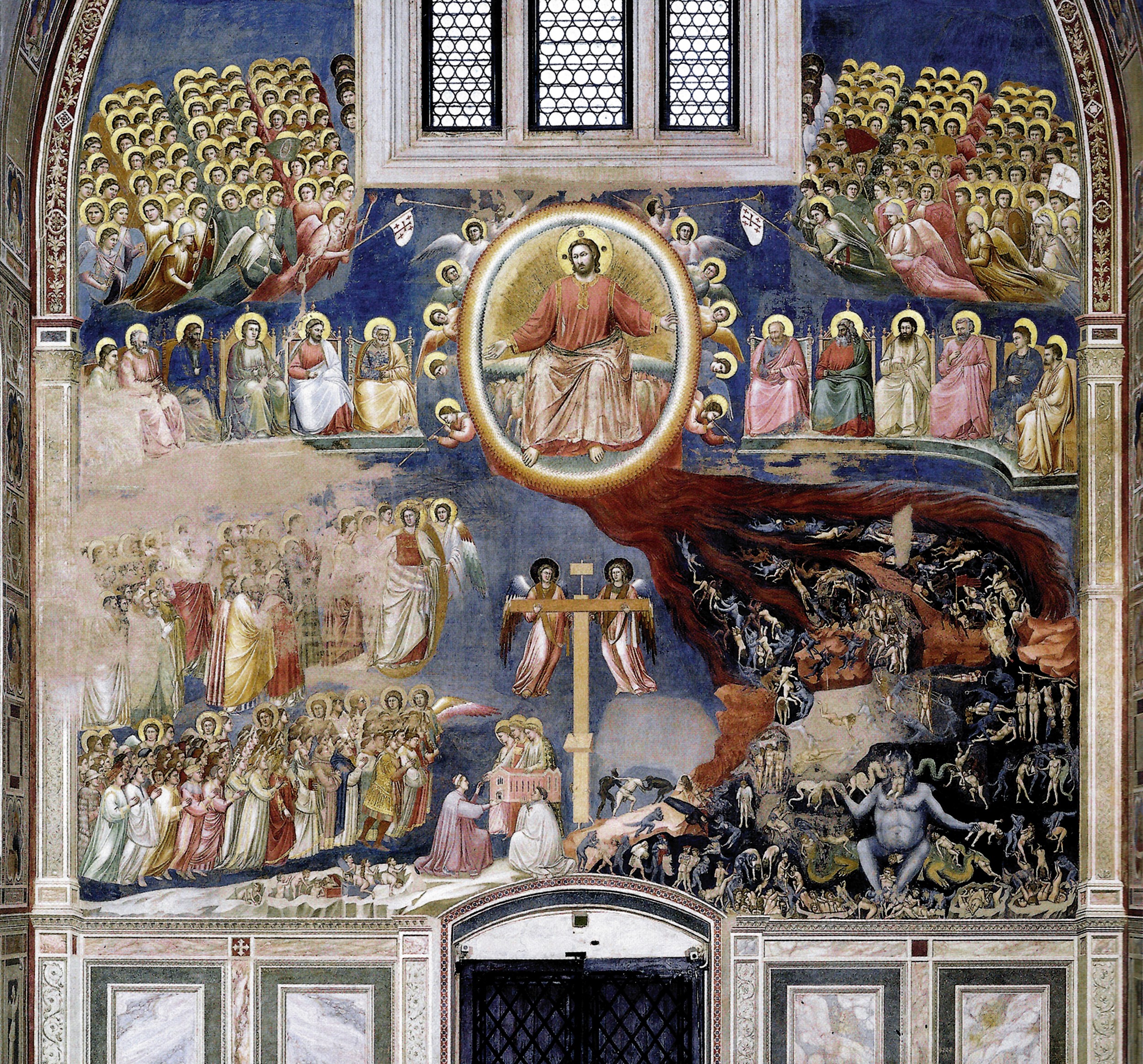
On the contrary, the hand with the palm down is the sign of the giver. This is the position of the hand when giving a blessing, for example.  Palm down gestures symbolize authority. They can also be associated with judgment/condemnation.

Take for example this depiction of Christ at the day of judgment from the 1306 Italian painting The Last Judgment by Giotto, in which Christ is depicted with His right hand extended toward the righteous with the palm up and His left hand extended toward the wicked with the palm down:


I picture the shadowing hand with the palm down, not in judgement but rather in the rest of the Lord, the divine hand providing cover for the covenant people.


Heaven and Earth

Stisa has posted extensively about this (see here, here and here) and I won't belabor all of the points he makes in these posts, but they are well worth your time to review in this new light. The covenant people actively seek to bring about the order of heaven on earth, summarized perfectly in the Lord's Prayer: "Our Father which art in heaven, Hallowed be thy name. Thy kingdom come. Thy will be done in earth, as it is in heaven." (Matthew 6:9-10)


"Behold, thou art my people"


While visiting the Nephites and establishing His covenant people among them, the Savior quoted Isaiah: "Verily, verily, I say unto you, that my people shall know my name" (3 Nephi 20:39). Recall that Jacob gave his sermon in 2 Nephi 6-10 in order to teach the people to "learn and glorify" the name of their God. The covenant people know the name of the Lord, and they learn this through sacred ordinances administered by angels.


Conclusion


In October 2021 General Conference, President Nelson said:


"...it is now time that we each implement extraordinary measures—perhaps measures we have never taken before—to strengthen our personal spiritual foundations. Unprecedented times call for unprecedented measures.

My dear brothers and sisters, these are the latter days. If you and I are to withstand the forthcoming perils and pressures, it is imperative that we each have a firm spiritual foundation built upon the rock of our Redeemer, Jesus Christ. ...

The temple lies at the center of strengthening our faith and spiritual fortitude because the Savior and His doctrine are the very heart of the temple. Everything taught in the temple, through instruction and through the Spirit, increases our understanding of Jesus Christ. His essential ordinances bind us to Him through sacred priesthood covenants. Then, as we keep our covenants, He endows us with His healing, strengthening power. And oh, how we will need His power in the days ahead." (President Russell M. Nelson, The Temple and Your Spiritual Foundation)


I'm grateful for the insights that come from my time in the temple. As a result of participating in the sacred ordinances of the temple, I see the scriptures with new eyes. The inverse is also true, when symbols and insights from the scriptures augment my understanding of temple worship.  

Saturday, April 18, 2020

Covenant symbols in Mosiah 18

I'm in the process of looking at symbols associated with covenants in the Book of Mormon.  Mosiah 18 has been one of my favorite chapters for a long time, but I've never noticed the symbolic parallels which seem to have been intentionally woven into the story line in order to subtly underscore the significance of what was happening.

First, let's look at the same two Isaiah verses that we looked at in yesterday's post. These verses are quoted by Jacob in one of his sermon to the Nephites.


3 For the Lord shall comfort Zion, he will comfort all her waste places; and he will make her wilderness like Eden, and her desert like the garden of the Lord. Joy and gladness shall be found therein, thanksgiving and the voice of melody.
4 Hearken unto me, my people; and give ear unto me, O my nation; for a law shall proceed from me, and I will make my judgment to rest for a light for the people. (2 Nephi 8)


Now let's see how the associated symbols appear in Mosiah 18. Keep in mind the context of the chapter is that after fleeing to the wilderness to escape the wicked King Noah and his corrupt priests, Alma-1 preaches the Gospel of repentance to those who will listen in a "thicket of small trees" near a "fountain of pure water" (see Mosiah 18:5). Both of these symbols are found in Lehi's dream and in the story of the Garden of Eden. (See 1 Nephi 11:25 and Genesis 2:9-10.) This is a not-so-subtle indication to the reader that the story they are about to read will demonstrate how the Lord fulfilled His promise to this group of Nephites to "make [their] wilderness like Eden." He does this, of course, by offering them a covenant.


8 And it came to pass that he said unto them: Behold, here are the waters of Mormon (for thus were they called) and now, as ye are desirous to come into the fold of God, and to be called his people, and are willing to bear one another’s burdens, that they may be light;
9 Yea, and are willing to mourn with those that mourn; yea, and comfort those that stand in need of comfort, and to stand as witnesses of God at all times and in all things, and in all places that ye may be in, even until death, that ye may be redeemed of God, and be numbered with those of the first resurrection, that ye may have eternal life—
10 Now I say unto you, if this be the desire of your hearts, what have you against being baptized in the name of the Lord, as a witness before him that ye have entered into a covenant with him, that ye will serve him and keep his commandments, that he may pour out his Spirit more abundantly upon you?
11 And now when the people had heard these words, they clapped their hands for joy, and exclaimed: This is the desire of our hearts. ...
14 And after Alma had said these words, both Alma and Helam were buried in the water; and they arose and came forth out of the water rejoicing, being filled with the Spirit. ...
19-29 "commanded" appears eight times.
23 And he commanded them that they should observe the sabbath day, and keep it holy, and also every day they should give thanks to the Lord their God. ...
30 And now it came to pass that all this was done in Mormon, yea, by the waters of Mormon, in the forest that was near the waters of Mormon; yea, the place of Mormon, the waters of Mormon, the forest of Mormon, how beautiful are they to the eyes of them who there came to the knowledge of their Redeemer; yea, and how blessed are they, for they shall sing to his praise forever. (Mosiah 18)

I'll be the first to admit that some of the connections don't seem intentional to me (in particular "comfort").  However, most of the connections do seem to be intentionally inserted according to the specific patterns set out by Jacob/Isaiah, especially the mentions of "joy/rejoicing" and "singing to his praise forever."

As an aside, it also seems Mormon couldn't stop himself from making the multi-layered reference to his own name and its association with this covenant-making. "How beautiful are they" is a clear reference to Isaiah 52:7 (see also Mosiah 12:21 and Mosiah 15:15-18). Mormon must have especially loved this story given his name, and of course the "Book of Mormon" was prophesied to be the instrument of gathering for the whole world in the latter days.

This is a great example of a Book of Mormon story that stands alone as a beautiful example of covenant-making. When coupled with the rich symbols embedded in the Old Testament (and the Hebrew language itself), the story blooms into something even more remarkable and marvelous. It is very hard for me to believe it is coincidental, or that a 23 year-old farm boy managed to accomplish this in a single dictated draft without notes. If Joseph Smith authored the Book of Mormon, he must have had a remarkable understanding of ancient Hebrew temple covenants in 1829, not to mention  the associated symbolism embedded in the Hebrew language.

Friday, April 17, 2020

Travelling to the Promised Land as a Metaphor for Covenants

In a recent post, I discussed the concept of crossing the great waters and the symbolic significance of this scriptural metaphor. Along the same lines, notice the thematic similarities between this passage from Isaiah:


3 For the Lord shall comfort Zion, he will comfort all her waste places; and he will make her wilderness like Eden, and her desert like the garden of the Lord. Joy and gladness shall be found therein, thanksgiving and the voice of melody.
4 Hearken unto me, my people; and give ear unto me, O my nation; for a law shall proceed from me, and I will make my judgment to rest for a light for the people. (2 Nephi 8)


...and this passage describing the Jaredites' journey to the promised land:


7 And it came to pass that when they were buried in the deep there was no water that could hurt them, their vessels being tight like unto a dish, and also they were tight like unto the ark of Noah; therefore when they were encompassed about by many waters they did cry unto the Lord, and he did bring them forth again upon the top of the waters.
8 And it came to pass that the wind did never cease to blow towards the promised land while they were upon the waters; and thus they were driven forth before the wind.
9 And they did sing praises unto the Lord; yea, the brother of Jared did sing praises unto the Lord, and he did thank and praise the Lord all the day long; and when the night came, they did not cease to praise the Lord.
10 And thus they were driven forth; and no monster of the sea could break them, neither whale that could mar them; and they did have light continually, whether it was above the water or under the water.
11 And thus they were driven forth, three hundred and forty and four days upon the water.
12 And they did land upon the shore of the promised land. And when they had set their feet upon the shores of the promised land they bowed themselves down upon the face of the land, and did humble themselves before the Lord, and did shed tears of joy before the Lord, because of the multitude of his tender mercies over them. (Ether 6)


This is not enough for me to conclude anything solid, yet, but I'll be looking into the symbols and words here in more depth to see what I find.

Thursday, April 16, 2020

"Your ruin is as deep as the sea"

I've posted before on the symbolism of the promised land in the Book of Mormon.  "Crossing the great waters"  has deep significance related to the establishment of a covenant people.  Think of Moses, the Jaredite, the Lehites, (maybe even the founding fathers of the US, who are mentioned in Nephi's vision, who helped create a setting where the restoration could take hold).  In each case, a prerequisite to establishing a covenant people is a crossing of the great waters by divine providence.

Lehi puts it this way:

6 Wherefore, I, Lehi, prophesy according to the workings of the Spirit which is in me, that there shall none come into this land save they shall be brought by the hand of the Lord.
7 Wherefore, this land is consecrated unto him whom he shall bring. And if it so be that they shall serve him according to the commandments which he hath given, it shall be a land of liberty unto them; wherefore, they shall never be brought down into captivity; if so, it shall be because of iniquity; for if iniquity shall abound cursed shall be the land for their sakes, but unto the righteous it shall be blessed forever. (2 Nephi 1)

It makes sense to me, then, that crossing the great waters is an apt symbol of establishing a new covenant with God.


Along these lines, I found a subtle connection with the Old Testament book of Lamentations:

What can I ·say [testify] about you, [L daughter] Jerusalem?    What can I compare you to?What can I say you are like?    How can I comfort you, ·Jerusalem [L virgin daughter Zion; C location of the Temple]?Your ·ruin [wound] is as ·deep [great] as the sea.    ·No one [L Who…?] can heal you. (EXB, Lamentations 2:13)


This entire chapter mourns the loss of the covenant people, the temple, and God's protection. It's very sad to read.

Of note, this destruction took place shortly after Lehi and his family were safely guided away from Jerusalem.

Verse 10 of the same chapter is also noteworthy, as it sets up a preface for one of the major themes of the Book of Mormon. Notice the contrasting elements of this passage:

The elders of ·Jerusalem [L the daughter of Zion; C the location of the Temple]    sit on the ground in silence.They throw dust on their heads    and put on ·rough cloth [sackcloth; burlap; signs of grief or repentance].The young women of Jerusalem    bow their heads to the ground [C in sorrow]. (Lamentations 2, Expanded Bible)


Compare this with the final passage in the Book of Mormon (quoting Isaiah 52):

31 And awake, and arise from the dust, O Jerusalem; yea, and put on thy beautiful garments, O daughter of Zion; and strengthen thy stakes and enlarge thy borders forever, that thou mayest no more be confounded, that the covenants of the Eternal Father which he hath made unto thee, O house of Israel, may be fulfilled. (Moroni 10)

(See also 2 Nephi 1:14, 21, 23 and 2 Nephi 8:24-25.)


Also compare this language from the title page:

Which is to show unto the remnant of the house of Israel what great things the Lord hath done for their fathers; and that they may know the covenants of the Lord, that they are not cast off forever...

The Book of Mormon highlights the theme of God remembering (and re-establishing) His covenant people in the latter days. Crossing the deep waters is one more way this is symbolically depicted. We'll close this post with a verse from Nephi's psalm:


20 My God hath been my support; he hath led me through mine afflictions in the wilderness; and he hath preserved me upon the waters of the great deep. (2 Nephi 4)

EDIT: Not surprisingly, Stisa has already written on a related aspect of this symbolism in this post.

ANNOUNCEMENT - new hosting service for BookofMormonNotes.com

We're excited to announce that this blog has a new home at WordPress.  Use  this link  to get there.  New projects, content, and feature...